October 1st may still feel a few weeks away but for hospital and physician practice coding and compliance teams the FY 2027 ICD-10 transition has already begun.
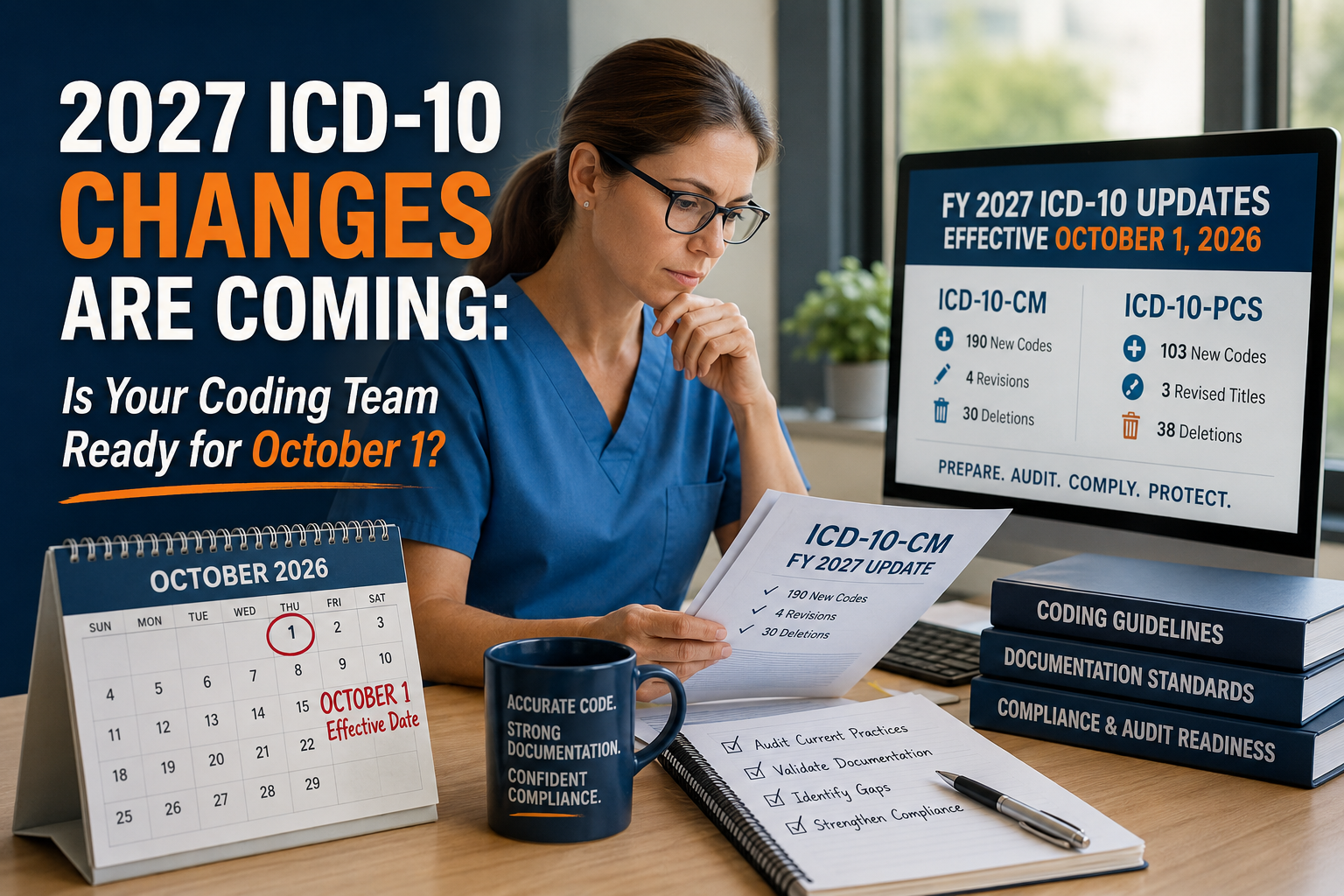
CMS and the CDC have released the final ICD-10-CM and ICD-10-PCS files that take effect October 1, 2026. The finalized 2027 ICD-10-CM update includes 190 new codes, four revisions and 30 deletions (228 total changes) which impact areas such as cardiomyopathy, metastatic cancer, pregnancy, musculoskeletal diagnoses, postprocedural conditions and exposure and history codes. ICD-10-PCS is changing as well, with 103 new codes, three revised titles and 38 deleted codes, bringing the procedure code set to 79,258 codes.
By recent standards, this year’s update is modest. But that’s exactly why it matters.
- The Real Opportunity Isn’t the New Codes—It’s What They Reveal
Every October new codes are added on top of the existing compendium of codes and guidance changes from the year before (and the year before that). Most organizations focus their attention on what’s new and give little thought to whether they’ve actually kept pace with everything that changed previously.
Therein lies the pitfall. Each modest annual update is the ideal moment to step back and ask a harder question: has your coding and documentation actually stayed current with how coding has evolved, or has drift quietly accumulated over the past several update cycles?
Coding and documentation drift rarely announces itself. It shows up gradually—an outdated code lingering on a preference list, a documentation habit that made sense under an old guideline but no longer matches current specificity requirements, or a service line where coders have developed inconsistent interpretations because no one has checked in months. None of that shows up until a denial, an audit, or a compliance review forces the issue.
With FY 2027 changes being relatively contained, organizations have room to do something more valuable than a code-by-code briefing: a full audit of current coding and documentation practices, benchmarked against where the code sets and guidelines actually stand today. What a Readiness Audit Should Cover
- How an Audit Can Help and What it Should Focus On
An effective pre-October audit looks backward as well as forward. It should examine:
- Whether current documentation supports the specificity that recent code cycles have required, not just the FY 2027 additions
- Whether deleted or retired codes from this year and prior years still appear on charge tickets, EHR preference lists, or templates
- Whether coding for high-volume and high-dollar service lines reflects current guidelines, not habits carried over from earlier code sets
- Whether coders across the team are interpreting the same documentation consistently, or whether variation has crept in
- Whether existing denial patterns trace back to coding or documentation gaps that predate this year’s update
- Whether MS-DRG assignment and claim edit logic have kept pace with the cumulative changes across recent fiscal years
This is a different exercise than distributing a list of new codes and asking coders to review it. It’s a compliance and accuracy checkpoint that uses the October 1 deadline as the occasion, but treats the real question as: are we confident in the coding and documentation we’ve been producing all year?
- Why This Matters Beyond October 1
Coding accuracy gaps that go undetected don’t stay contained. They surface as denials, payer audits, RADV findings, or compliance exposure—usually months after the coding was actually performed, when the underlying documentation is harder to trace and correct.
An organization that waits for a payer audit or a compliance flag to discover a documentation gap is always in a reactive position. An organization that proactively audits its coding and documentation ahead of October 1 can identify and correct those gaps on its own terms, before they become findings someone else discovers first.
- How TCN Can Help
The Coding Network provides independent, specialty-specific coding compliance audits that evaluate both coding accuracy and the documentation behind it. TCN’s auditors don’t just score a sample against current guidelines or industry benchmarks but redirect focus to identifying patterns: where documentation consistently falls short of what a code requires, where coders are interpreting the same scenario differently, and where a service line’s coding has quietly drifted from current standards.
While the audit can be scoped specifically around FY 2027 readiness, best practices favor a broader lens encompassing overall coding and documentation compliance heading into the new fiscal year. Either way, the output is the same: a clear picture of where your organization stands today, and a prioritized list of what to fix before those gaps become denials, audit findings, or compliance risk.
TCN also provides scalable, specialty-specific coding support if an audit surfaces capacity or coverage gaps your internal team can’t absorb on its own. TCN coders are U.S.-based, credentialed, specialty-specific, and can work within your existing workflows—whether you need temporary coverage during the transition or ongoing support afterward.
- Is Your Coding Team Ready for October 1?
The most useful question this fall isn’t, did we review the new codes.” Instead it is, are we confident in the coding and documentation we’ve been producing all year and will we continue to be compliant going forward.
Contact TCN to schedule a coding and documentation compliance audit before the FY 2027 changes take effect on October 1.