Dental Coding Audits
Dental practices should periodically audit their coding to minimize compliance risk and optimize revenue. Many private payers, Medicaid’s Special Investigative Units (SIU’s), and the Department of Justice have had recently increased their focus on compliance, especially since children’s dentistry is now covered by the Affordable Care Act, a/k/a “Obamacare”. They are auditing dental practices with greater frequency to detect fraud, waste, and abuse. These compliance audits can lead to large recoupment payments from practices. In our experience, many practices that are caught for fraud aren’t purposefully committing criminal acts, they are simply victims of deficient coding or documentation knowledge. Periodic coding audits will help you catch these deficiencies in your practice’s coding or documentation skills before a payer audit, giving you proper time to fix any issues.
Most dental providers never receive proper training in documentation and coding or delegate this task to untrained receptionists. Our audits commonly uncover documentation deficiencies, which can inadvertently lead to lower payments and missed revenue as well as legal exposure. We often identify cases in which providers properly document their services but aren’t coding for every procedure they perform, which can also lead to lower payments.
Our years of experience in performing coding and auditing projects as part of dentists’ legal settlements with the Office of the Inspector General and The Department of Justice have given us a deep understanding of both the risks that practices face and the importance of prudent and early action. Accurate coding requires walking a fine line. Your practice wants to optimize revenue by accurately coding for each service rendered, while simultaneously ensuring that your coding and documentation aren’t opening the practice up to any compliance issues. The Coding Network’s dental audits will help you determine just how accurate your coding is and what effect it is having on your compliance risk and revenue cycle.

Latest Blog Posts:

2027 ICD-10 Changes Are Coming: Is Your Coding Team Ready for October 1?
October 1st may still feel a few weeks away but for hospital and physician practice coding and compliance teams the FY 2027 ICD-10 transition has already begun. CMS and the CDC have released the final ICD-10-CM [...]

Three Hidden Costs of In-House Medical Coding That Healthcare Leaders Often Miss
The Real Cost of Coding: Beyond Salary Most healthcare finance leaders know what they pay their coding team. Fewer know the real cost of in-house medical coding — and the distinction matters. The visible cost [...]

Why Human Oversight in AI Medical Coding Remains Essential in 2025
The emergence of AI in medical coding is invariably impacting healthcare and traditional workflows and resource allocation. Yet, as AI platforms tout accuracy rates exceeding 90%, a critical question persists: Can autonomous coding stand alone? [...]
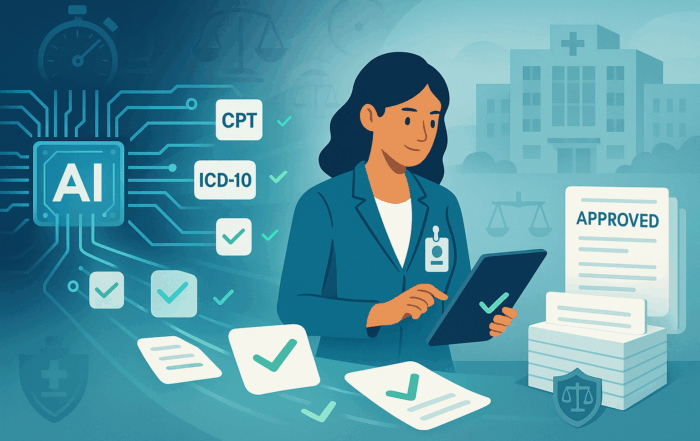
AI Medical Coding Is Fast—Until Compliance Slows You Down
Why Human Validation Is Now Mission‑Critical (and How to Add It Overnight) Artificial‑intelligence engines from Aidéo, Fathom, Nym, 3M, and others are transforming medical coding speed. Yet payers haven’t lowered the bar— they’ve raised it. Humana, [...]